Executive Summary
- Standardize programmatic access to cloud security posture findings using OAuth 2.0 token authentication.
- Automate GraphQL queries against endpoints to fetch real-time vulnerability and asset inventory data.
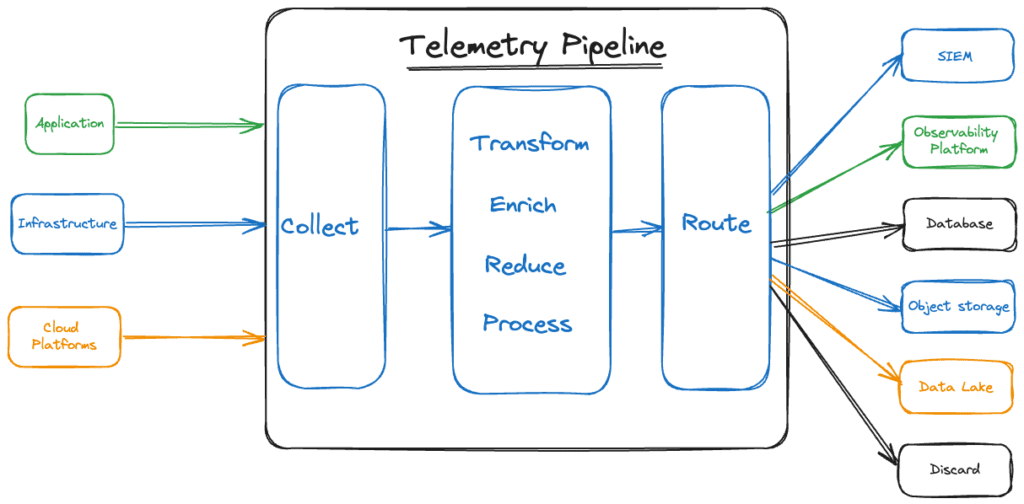
- Integrate CNAPP findings directly into SIEM pipelines and automated ticket remediation workflows.
- Eliminate static tokens by implementing automated service account secret rotation in AWS Secrets Manager.
Deploying enterprise-grade wiz cloud security 4 requires robust API authentication to automate security posture management and cloud threat detection across multi-cloud environments.
Modern IT architectures rely heavily on programmatic access to maintain continuous visibility. Security teams must integrate these capabilities directly into their existing operational workflows and incident response pipelines.
Manual security audits are no longer sufficient for dynamic cloud ecosystems. Organizations need automated event-driven triggers that respond instantly to newly discovered vulnerabilities or misconfigurations.
At SolideInfo, our engineering teams emphasize the importance of API-first security strategies. Building reliable data pipelines allows security operations centers to ingest threat intelligence without human bottleneck delays.
By adopting structured authentication methods and optimized query mechanisms, enterprises can achieve true digital transformation. This approach strengthens security posture while enabling scalable DevOps practices across the infrastructure.
Understanding the Foundations of Wiz Cloud Security API
API-driven security management forms the backbone of modern cloud defense strategies. Enterprises must leverage programmatic endpoints to query their security posture at scale and in real time.
Interacting with these platforms requires a deep understanding of their authentication mechanisms. Securing the integration layer prevents unauthorized access to sensitive cloud vulnerability intelligence.
The architecture relies on secure token exchange protocols and advanced query languages. This combination provides developers with granular control over the precise data they extract from the platform.
Authentication Architecture via OAuth 2.0 Endpoint
Enterprise APIs mandate secure authentication workflows to protect sensitive environmental data. The standard approach utilizes the OAuth 2.0 client credentials grant type for machine-to-machine communication.
Service accounts securely request temporary bearer tokens from the auth.app.wiz.io authentication endpoint. These tokens provide time-limited access to execute specific API queries against the platform.
Hardcoding long-lived credentials introduces severe security risks within enterprise environments. Infrastructure teams must utilize secure vault solutions to inject client IDs and client secrets dynamically.
Bash
# Anonymized Token Request Example
curl -s -X POST https://auth.app.wiz.io/oauth/token \
  -H "Content-Type: application/x-www-form-urlencoded" \
  -d "grant_type=client_credentials" \
  -d "client_id=<REDACTED_CLIENT_ID>" \
  -d "client_secret=<REDACTED_CLIENT_SECRET>" \
  -d "audience=wiz-api"
Plaintext
# Terminal Output (Sanitized)
{
  "access_token": "eyJhbGciOiJSUzI1...",
  "expires_in": 86400,
  "token_type": "Bearer"
}
The Wiz GraphQL Schema and Event Data Graph
Legacy REST architectures often force developers to make multiple sequential endpoint requests. This results in significant overhead when retrieving complex, interconnected cloud asset relationships.
The wiz graphql api solves this problem by utilizing a single unified endpoint. Engineers can construct targeted queries that return exactly the required fields in one network payload.
This schema represents your entire cloud infrastructure as a massive interconnected graph. It highlights the relationships between exposed workloads, IAM privileges, and underlying infrastructure vulnerabilities.

Service Account Scopes and Least-Privilege Granularity
Implementing robust security requires adhering strictly to the principle of least privilege. Service accounts must never possess global administrative permissions across your cloud security platform.
Administrators must define custom roles containing only the necessary read-only privileges. These scoped service accounts can query vulnerabilities without possessing the ability to alter security configurations.
Auditing these service account permissions should be a recurring operational requirement. SolideInfo strongly recommends quarterly reviews of all API keys integrated into your production automation pipelines.
Implementing Enterprise OAuth Automation and API Querying
Executing a successful implementation requires writing reliable automation scripts. These tools must handle authentication, execute complex queries, and parse the resulting data accurately.
Production-grade automation must anticipate network failures and token expiration events. Resilient code gracefully manages HTTP timeouts and automatically requests new authentication tokens when required.
Integrating these automated queries enables true cspm automation within the enterprise. Cloud posture metrics can seamlessly flow into centralized dashboards for executive review and compliance tracking.
Requesting Bearer Tokens from the OAuth Auth Service
Your automation script must begin by negotiating a secure session. The code submits the client credentials to the authentication server and extracts the bearer token.
This token is subsequently injected into the authorization headers of all subsequent requests. Maintaining the secrecy of this token during runtime execution is absolutely critical for security.
Engineers should ensure that logging mechanisms never capture these sensitive bearer tokens. Application logs must sanitize output to prevent accidental credential leakage in centralized logging platforms.
Python
# Anonymized Python Authentication Function
import requests
import os

def get_auth_token():
    url = "https://auth.app.wiz.io/oauth/token"
    payload = {
        'grant_type': 'client_credentials',
        'client_id': os.environ.get('WIZ_CLIENT_ID'),
        'client_secret': os.environ.get('WIZ_CLIENT_SECRET'),
        'audience': 'wiz-api'
    }
    response = requests.post(url, data=payload)
    response.raise_for_status()
    return response.json().get('access_token')
Building Paginated GraphQL Queries for Vulnerability Findings
Enterprise environments generate massive volumes of cloud security data daily. A single API query cannot return all vulnerabilities without exceeding payload size limitations or causing timeouts.
Pagination mechanisms must be implemented to retrieve data in manageable chunks. The script requests a specific cursor and loops through subsequent pages until all results are fetched.
This systematic approach guarantees complete data extraction for accurate reporting. Overlooking pagination logic is a common error that leads to incomplete vulnerability metrics in SIEM dashboards.
GraphQL
# Anonymized GraphQL Pagination Query
query GetVulnerabilities($cursor: String) {
  vulnerabilities(first: 500, after: $cursor) {
    pageInfo {
      hasNextPage
      endCursor
    }
    nodes {
      id
      severity
      name
      hasExploit
      resolvedAt
    }
  }
}
Processing JSON Responses into SIEM and Incident Pipelines
The API returns highly structured JSON payloads containing complex nested dictionaries. This data requires normalization and flattening before it can be effectively indexed by downstream security tools.
Mapping these JSON fields to your SIEM schema ensures seamless cnapp integration. Analysts can then correlate these cloud infrastructure risks against active network threat intelligence feeds.
Automated pipelines can dynamically generate IT service management tickets based on severity. Critical vulnerabilities mapped to external-facing assets can trigger immediate paging alerts to on-call infrastructure engineers.

Operational Challenges and Production Security
Scaling API integrations introduces specific architectural and operational challenges. Enterprise teams must design their systems to handle massive throughput while respecting vendor infrastructure limits.
Failing to manage these constraints leads to service disruptions and missing intelligence. Robust error handling and strategic scheduling are required to maintain a highly available security pipeline.
Security engineers must also defend the automation infrastructure itself. The servers executing these scripts become high-value targets and require strict network isolation and access controls.
Managing API Rate Throttling and Endpoint Quotas
Cloud platforms strictly enforce rate limits to protect their backend database performance. Aggressive polling intervals will quickly result in HTTP 429 Too Many Requests error responses.
Developers must implement intelligent exponential backoff algorithms within their integration code. When a throttle response is received, the script pauses briefly before reattempting the exact same query.
Batching requests during off-peak operational hours minimizes the impact on shared API limits. SolideInfo engineers typically schedule massive asset inventory synchronization tasks for late-night maintenance windows.
Anonymized Code Demonstration Automated Python Exporter Script
Bringing these concepts together requires a unified, executable automation script. The following example demonstrates a secure, paginated data extraction pipeline suitable for enterprise deployment.
This script fetches the token, queries the endpoint, handles pagination, and outputs flattened JSON. It strictly relies on environmental variables to prevent hardcoded credentials in the source code.
Python
# Anonymized Enterprise API Exporter
import requests
import json
import os
import time

API_URL = "https://api.us1.app.wiz.io/graphql"

def fetch_data(token, cursor=None):
    headers = {"Authorization": f"Bearer {token}"}
    query = """
    query ($cursor: String) {
      issues(first: 100, after: $cursor) {
        pageInfo { hasNextPage endCursor }
        nodes { id severity status }
      }
    }
    """
    response = requests.post(API_URL, json={'query': query, 'variables': {'cursor': cursor}}, headers=headers)
    if response.status_code == 429:
        time.sleep(10) # Simple backoff
        return fetch_data(token, cursor)
    return response.json()

# Execution workflow omitted for brevity
Plaintext
# Terminal Output (Sanitized)
[INFO] Authenticating with OAuth endpoint...
[INFO] Token acquired. Expiration in 86400s.
[INFO] Fetching page 1...
[INFO] Retrieved 100 issues. hasNextPage: True
[INFO] Fetching page 2...
[INFO] Export complete. 184 total issues processed.

Advanced FAQ Section
How does this technology impact enterprise IT strategy? API-driven cloud security completely shifts IT strategy from reactive manual audits to proactive, continuous monitoring. It allows infrastructure teams to embed security directly into the CI/CD pipeline, ensuring compliance without slowing down development deployments.
What are the main implementation challenges? The primary challenges include managing complex GraphQL queries, handling API rate limits, and securing the service account credentials. Parsing massive nested JSON payloads into a format usable by legacy SIEM systems also requires significant data engineering effort.
What should IT leaders consider before adopting it? Leaders must evaluate their existing SIEM capacity to ingest high-volume cloud telemetry data effectively. They must also ensure their engineering teams possess the necessary Python, automation, and API development skills required to maintain these integrations.
By standardizing your API integrations around wiz cloud security, enterprise SOC teams achieve full visibility, automated compliance auditing, and real-time posture management.
Discover more from Solide Info | The Engineer’s Authority on Cyber Defense
Subscribe to get the latest posts sent to your email.