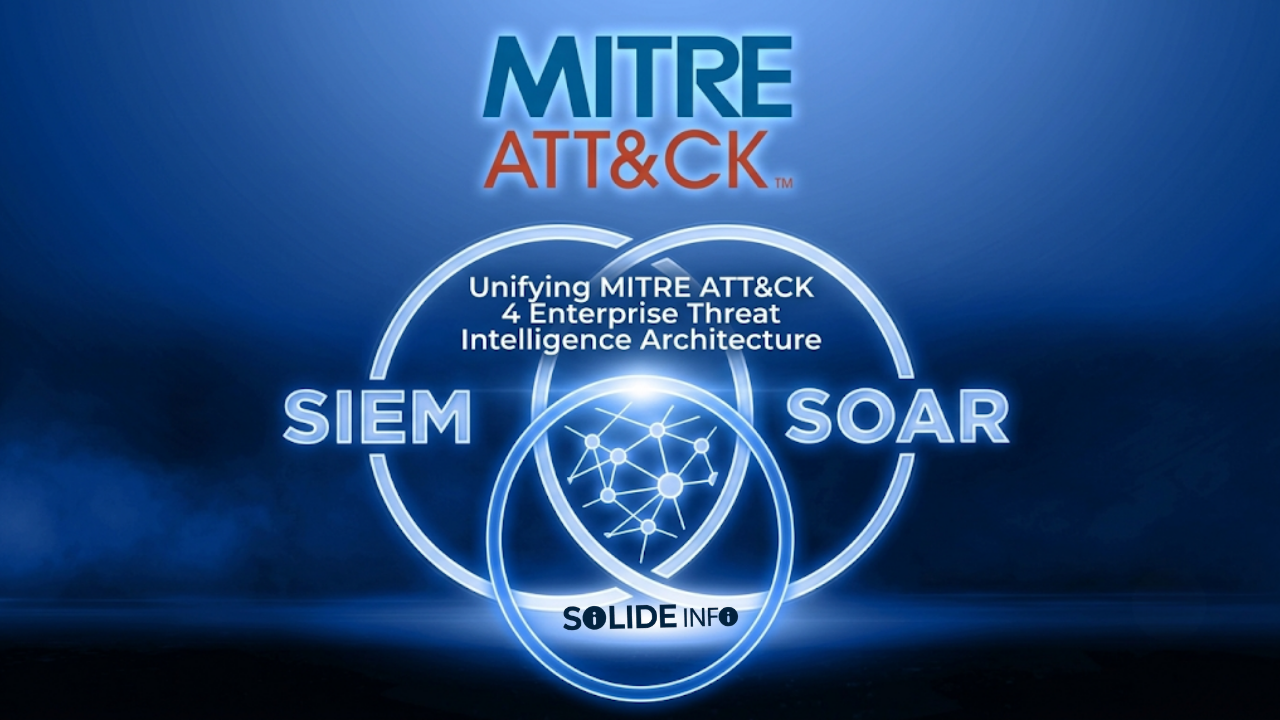
Understanding adversary behavior demands actionable threat data, making mitre attack the premier knowledge base for categorizing real-world attacker techniques and tactical behaviors. Modern enterprises operate hybrid environments spanning on-premises systems, multi-cloud platforms, identity providers, and operational technology.
Traditional perimeter defenses and signature-based tools no longer suffice against adaptive adversaries. Security teams require a shared language that maps observed behaviors to defensive controls, detection rules, and response playbooks.
The combination of the mitre attack framework and the Cyber Kill Chain supplies that language. One delivers granular tactics and techniques. The other provides a strategic linear progression that executives and architects can communicate easily.
Together they form a practical architecture for threat intelligence, detection engineering, and SOC automation.
Executive Summary
- Mitre attack organizes hundreds of real-world techniques into tactics that describe adversary goals.
- The Cyber Kill Chain supplies a high-level sequence that helps teams prioritize early disruption.
- Mapping techniques to kill-chain stages improves coverage measurement and playbook design.
- Integrating both into SIEM, SOAR, and threat-intelligence platforms enables automated enrichment and hunting.
Readers gain a clear method to inventory detection coverage, prioritize gaps, and operationalize adversary intelligence without relying on vendor-specific models alone.
Understanding the Foundations of Mitre Attack and the Cyber Kill Chain
Mitre attack is a living knowledge base maintained by MITRE and the global security community. It catalogs adversary tactics, techniques, and procedures observed in actual operations.
Tactics represent the “why” of an action. Techniques describe the “how.” Sub-techniques add further specificity. Current Enterprise matrices cover Windows, Linux, macOS, cloud, containers, and identity platforms.
As of recent releases the Enterprise tactic set includes Reconnaissance, Resource Development, Initial Access, Execution, Persistence, Privilege Escalation, Stealth, Defense Impairment, Credential Access, Discovery, Lateral Movement, Collection, Command and Control, Exfiltration, and Impact.
Each technique carries unique identifiers such as T1566 for Phishing. Detection guidance, mitigations, data sources, and procedure examples accompany most entries.
The Cyber Kill Chain, developed by Lockheed Martin, models an intrusion as seven sequential stages: Reconnaissance, Weaponization, Delivery, Exploitation, Installation, Command and Control, and Actions on Objectives.
Its strength lies in strategic clarity. Breaking any single stage can halt the campaign. Its limitation is coarse granularity and the assumption of strict linearity. Real adversaries often loop, parallelize, or skip stages.
Mapping mitre attack techniques onto kill-chain stages creates a dual-layer model. Kill-chain stages frame the campaign. Techniques supply the precise behaviors defenders must detect or prevent.
Mapping Tactics to Kill-Chain Stages
Reconnaissance and Resource Development align with the early kill-chain stages. Initial Access and Execution map to Delivery and Exploitation. Persistence, Privilege Escalation, and Credential Access support Installation and later stages.
Command and Control and Exfiltration correspond directly. Impact and Collection cover Actions on Objectives. Stealth and Defense Impairment appear across multiple stages because evasion is continuous.
This mapping is not rigid. Analysts adjust it for specific threat groups or campaign types. The result is a shared vocabulary that threat-intelligence teams, detection engineers, and incident responders can use without translation loss.
Practical Inventory of Coverage
Security teams begin by exporting existing detection rules from SIEM and EDR platforms. Each rule receives one or more technique identifiers.
A simple coverage matrix then shows which techniques have high-confidence detections, partial visibility, or none. Gaps in early kill-chain stages receive priority because disruption there yields the highest return.
Terminal output from a sanitized coverage query might appear as follows:
text
$ python attck_coverage.py --matrix enterprise --output summary
Technique coverage report (sanitized)
T1566.001  Phishing: Spearphishing Attachment   Detection: high
T1059.001  Command and Scripting Interpreter: PowerShell   Detection: medium
T1003.001  OS Credential Dumping: LSASS Memory   Detection: low
T1071.001  Application Layer Protocol: Web Protocols   Detection: high
Coverage score early stages: 62%
Coverage score late stages: 81%
Such inventories drive data-source decisions and rule development roadmaps.
How Mitre Attack Fits Into Modern IT and Enterprise Infrastructure
Enterprise infrastructure today is rarely monolithic. Workloads move between private data centers, public cloud, and edge locations. Identity is centralized through providers. Containers and serverless functions introduce short-lived attack surfaces.
Mitre attack matrices already include platforms for cloud, containers, and identity. Techniques such as cloud account manipulation or container CLI execution appear alongside traditional host-based behaviors.
Threat-intelligence platforms ingest STIX-formatted ATT&CK data and enrich internal telemetry. SIEM correlation rules reference technique IDs so that alerts arrive with context. SOAR playbooks trigger different response paths according to the mapped technique and kill-chain stage.
Network detection tools, endpoint agents, and cloud security posture management solutions all benefit from the same taxonomy. When an alert carries a technique identifier, analysts immediately understand the adversary’s goal and likely next steps.
Integration with Hybrid Cloud and Identity
Cloud control-plane logs and identity provider events map cleanly to Resource Development, Initial Access, and Privilege Escalation techniques.
A detection for anomalous role assumption can be labeled with the appropriate technique ID and associated with the Delivery or Exploitation stage of the kill chain.
This labeling enables automated prioritization. High-impact techniques in early stages surface first in the SOC queue.
Architecture Overview Diagram
The following Graphviz diagram illustrates a high-level architecture that unifies mitre attack data with enterprise telemetry and the Cyber Kill Chain.

Telemetry flows into an enrichment layer that tags events with technique identifiers and kill-chain stages. The resulting context feeds both automated response and strategic intelligence products.
Real-World Applications and Technical Use Cases
Organizations apply the combined model in several concrete ways. Detection engineering teams write rules that target specific techniques while measuring progress against kill-chain coverage.
Threat-hunting teams develop hypotheses based on technique prevalence within particular adversary groups. Red teams emulate sequences of techniques that correspond to known campaigns, validating blue-team visibility.
Incident responders use the dual model during triage. An alert mapped to T1078 Valid Accounts and the Installation stage immediately suggests credential-based persistence checks.
Threat-intelligence analysts structure reports around both frameworks so that consumers understand both the strategic stage and the tactical behaviors.
Detection Engineering Workflow
A typical workflow begins with selection of high-priority techniques drawn from recent intelligence. Engineers identify required data sources, craft analytic logic, and attach the technique ID plus kill-chain stage.
After deployment they measure false-positive rates and coverage contribution. Automated regression tests using adversary emulation tools confirm that the detection still fires against updated variants.
Sanitized command example for validating a detection:
text
$ atomic-red-team run --technique T1059.001 --cleanup
Executing PowerShell command interpreter test
Telemetry expected: process creation with command-line indicators
Result: detection rule fired within 12 seconds
Kill-chain stage tagged: Execution / Installation
Such tests keep the detection library aligned with both frameworks.
Technical Workflow Diagram
The next diagram shows the operational workflow from intelligence intake through detection deployment.

Feedback loops ensure continuous improvement as new techniques appear or adversary behavior shifts.
Operational Challenges and Best Practices
Adopting the combined model introduces several practical challenges. The volume of techniques can overwhelm teams that attempt full coverage. Data-source gaps leave entire technique categories invisible.
Maintaining mappings as both the mitre attack framework and internal tools evolve requires disciplined processes. Over-tagging alerts with every possible technique dilutes value.
Best practices observed across mature programs include focusing first on techniques used by relevant threat groups, measuring coverage by kill-chain stage rather than raw technique count, and treating the frameworks as living references rather than static checklists.
Automation reduces manual mapping effort. STIX imports keep technique lists current. SOAR platforms apply consistent enrichment logic.
Regular adversary-emulation exercises surface blind spots faster than passive monitoring. Leadership communication benefits from kill-chain language while technical teams retain technique-level detail.
Lifecycle of Continuous Improvement
The final diagram depicts the operational lifecycle that keeps the unified model effective over time.

Each cycle tightens the alignment between observed threats and defensive capability.
Advanced FAQ Section
How does this technology impact enterprise IT strategy? It shifts strategy from tool-centric to behavior-centric. Leaders allocate budget toward data sources and analytics that close early-stage gaps rather than purchasing another point product. Risk assessments gain quantitative coverage metrics tied to real adversary techniques.
What are the main implementation challenges? Incomplete telemetry, tool silos that do not share technique tags, and the cognitive load of maintaining mappings. Teams that treat the exercise as a one-time project rather than an ongoing process quickly fall behind as both threats and the framework evolve.
What should IT leaders consider before adopting it? Evaluate existing data quality, the maturity of detection engineering processes, and the ability of current platforms to ingest and act on technique identifiers. Start with a pilot focused on a single high-priority kill-chain stage rather than attempting enterprise-wide coverage immediately.
How does SOC automation benefit from the combination? Playbooks become technique-aware. Isolation actions, enrichment queries, and escalation paths can differ based on the mapped technique and stage. Automated hunting queries can be generated from technique lists associated with active threat groups.
Can the model support both IT and OT environments? Yes. Separate matrices exist for ICS, and hybrid assets can be mapped across domains. The kill-chain framing remains useful for communicating risk to operational stakeholders while technique detail guides technical controls.
By embedding operational telemetry into mitre attack, security architects transform raw threat intelligence into an automated, proactive defense strategy. The unified architecture described here supplies both the strategic narrative and the tactical precision required for modern enterprise environments.
Discover more from Solide Info | The Engineer’s Authority on Cyber Defense
Subscribe to get the latest posts sent to your email.