Enterprise teams evaluating ServiceNow GRC face a recurring problem: risk, policy, and audit data live in spreadsheets that never sync with the systems actually running the business. This disconnect between governance intent and operational reality is exactly what a modern GRC platform is built to solve.
This article walks through the architecture, integration points, and operational discipline required to implement ServiceNow GRC as a real automation layer, not just a reporting dashboard.
Executive Summary
- ServiceNow GRC only delivers value when it is architecturally fused with the CMDB, ITSM, and vulnerability response tables — not deployed as an isolated module.
- Continuous Controls Monitoring (CCM) replaces point-in-time audits with scheduled, automated evidence collection tied directly to live configuration data.
- Flow Designer and Integration Hub turn policy violations into orchestrated remediation tasks instead of manual email chains between compliance and IT teams.
- Data quality in the CMDB is the single biggest predictor of GRC program success or failure — automation amplifies both good and bad underlying data.
Understanding the Foundations of ServiceNow GRC
Before implementing anything, architects need a precise mental model of how ServiceNow structures governance data. GRC is not a single application; it is a family of interlocking data tables.
Policy and Compliance Management, Risk Management, Audit Management, and Vendor Risk Management all sit on top of a shared Common Compliance Framework. This is what allows one control to satisfy multiple regulatory frameworks simultaneously.
The GRC Data Model – Policies, Risks, and Controls
The core object hierarchy flows from Policy to Control Objective to Control to Indicator. Each layer inherits attribution and scoring logic from the one above it.
A single control, such as “quarterly access recertification,” can be mapped to ISO 27001, SOC 2, and an internal policy at the same time. This many-to-many mapping is what eliminates duplicated audit work.
Risks are modeled separately but linked to controls through the risk-control matrix. When a control fails its automated test, the linked risk’s residual score recalculates automatically.
GRC Object Hierarchy (conceptual)
Policy
 └─ Control Objective
     └─ Control
         └─ Indicator (automated or manual test)
             └─ Risk (residual score updates on indicator result)
Continuous Controls Monitoring Engine
Continuous Controls Monitoring (CCM) is the feature that separates a modern GRC deployment from a legacy audit tracker. Instead of manual evidence uploads, CCM schedules automated queries against live production data.
An indicator can, for example, query the CMDB nightly to confirm that all internet-facing servers have an active vulnerability scan record within the last 30 days. A failed query auto-generates a compliance task.
This is where the platform earns its automation reputation: audit evidence becomes a byproduct of normal operations rather than a quarterly scramble.
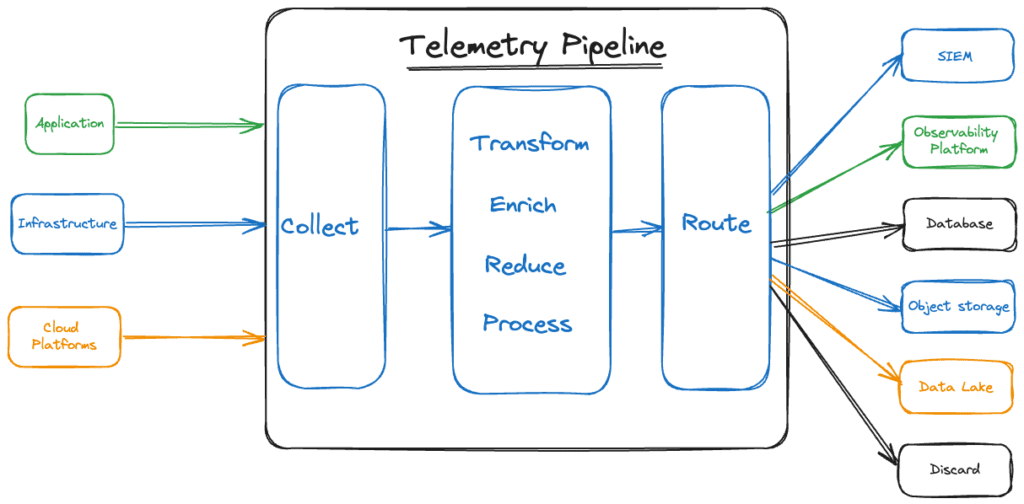
Below is a workflow diagram illustrating how a single CCM indicator moves from scheduled trigger to remediation task.

How ServiceNow GRC Fits Into Modern Enterprise IT Infrastructure
GRC does not operate in isolation. Its accuracy depends entirely on the quality of the operational data feeding it from ITSM, ITOM, and security operations modules.
Enterprises running hybrid infrastructure — a mix of on-premise data centers, private cloud, and public cloud workloads — need this integration layer to keep compliance evidence current across environments.
Integration With ITSM, ITOM, and the CMDB
The Configuration Management Database is the backbone that GRC queries constantly. Every asset, application service, and business service record becomes a potential subject of a compliance indicator.
Without accurate CMDB relationships, a control like “all production databases must have encryption at rest” cannot be automatically verified — it silently reverts to manual attestation.
Discovery and Service Mapping populate this data continuously. Architects should treat CMDB health as a prerequisite project, not a parallel workstream, before scaling GRC automation.
Connecting Threat Intelligence and Vulnerability Response
Security Operations (SecOps) modules, particularly Vulnerability Response, feed directly into risk scoring. A critical CVE on an unpatched, internet-facing asset should escalate the linked business service’s risk score immediately.
This is typically achieved through the shared CMDB relationship and event-driven business rules rather than a nightly batch job, keeping the risk register close to real time.
Here is a sanitized example of how a scheduled script might pull open critical vulnerabilities for risk correlation, using generic placeholder values only:
// Sample ServiceNow scheduled script — sanitized example, no environment-specific data
(function pullCriticalVulnRisk() {
  var vulnGr = new GlideRecord('sn_vul_vulnerable_item');
  vulnGr.addQuery('severity', '1'); // Critical
  vulnGr.addQuery('state', '!=', 'closed');
  vulnGr.query();

  while (vulnGr.next()) {
    var ciSysId = vulnGr.getValue('cmdb_ci');
    gs.eventQueue('grc.risk.recalculate', vulnGr, ciSysId, 'critical_vuln_open');
  }
})();
Sample sanitized terminal output confirming a similar job ran successfully in a sandbox instance (no real hostnames, credentials, or org identifiers shown):
$ curl -s -X GET "https://dev-instance.service-now.com/api/now/table/sn_vul_vulnerable_item?sysparm_query=severity=1^state!=closed&sysparm_limit=1" \
  -H "Accept: application/json"

{
  "result": [
    {
      "number": "VIT0001042",
      "severity": "1",
      "state": "open",
      "short_description": "Critical CVE identified on sandbox test asset"
    }
  ]
}
Identity, Access, and Third-Party Risk Signals
Identity governance data — access reviews, orphaned accounts, privileged role assignments — is another feed point. GRC indicators can query IGA connectors to verify recertification cadence automatically.
Vendor Risk Management extends this same model outward, scoring third parties using questionnaire responses combined with external threat intelligence feeds, rather than static annual assessments.
Below is a simplified architecture diagram showing GRC’s trust boundaries relative to the rest of the platform.

Architecting Automated Risk and Compliance Workflows
Implementation success depends on treating GRC as a workflow automation project rather than a data entry exercise. The goal is to remove humans from repetitive evidence-gathering steps.
Policy-to-Control Mapping and Automated Test Execution
Start by importing your authoritative framework (ISO 27001, NIST 800-53, SOC 2) as a Content Pack, then map internal policies to the pre-built control objectives instead of authoring from scratch.
Each control should be classified as either automated or manual during design. Automated controls get an indicator definition; manual controls get a recurring attestation task with a fixed SLA.
This classification decision should happen in a working session with control owners, not unilaterally by the implementation team, since owners understand which evidence genuinely exists in source systems.
Flow Designer Orchestration for Remediation
When an indicator fails, Flow Designer routes the resulting task based on business service ownership, criticality, and existing change management windows — avoiding disruptive emergency changes for low-risk findings.
Sanitized Flow Designer trigger definition (excerpt, no environment identifiers):

Trigger: Record Updated
Table: sn_compliance_task
Condition: state changes to "failed"
Action 1: Look up business service owner
Action 2: Create remediation task, priority = risk_score mapped value
Action 3: Notify owner via assigned notification template
Action 4: If SLA breached, escalate to control owner's manager
Sample Terminal Output From a Sandbox Instance
To demonstrate a real automated test execution rather than a theoretical description, here is sanitized output from a sandbox indicator run (all identifiers replaced with generic placeholders):
$ curl -s -X POST "https://dev-instance.service-now.com/api/now/table/sn_grc_auto_control_test_result" \
  -H "Content-Type: application/json" \
  -d '{"control":"encryption_at_rest_check","result":"fail","evidence_ref":"scan_batch_0042"}'

{
  "result": {
    "sys_id": "8f3a2c1e...redacted",
    "control": "encryption_at_rest_check",
    "result": "fail",
    "state": "new",
    "created_on": "2026-08-14 02:10:11"
  }
}
Following this pattern across dozens of controls is what converts a GRC deployment from a static repository into a living compliance engine.
Operational Challenges and Best Practices
Most ServiceNow GRC programs stall not because of licensing or module selection, but because of unresolved data ownership and governance debt inherited from legacy tracking spreadsheets.
Data Quality and CMDB Dependency
Automated indicators are only as trustworthy as the CMDB relationships behind them. A common failure pattern is deploying CCM before Discovery coverage reaches an acceptable threshold, usually above 90%.
Run a CMDB health assessment — completeness, correctness, and relationship accuracy — before committing to automated control dates in an audit calendar shared with external auditors.
Governance Ownership and Change Management
Every control needs a named business owner, not a departmental mailbox. Ambiguous ownership is the leading cause of missed remediation SLAs in mature GRC deployments.
Changes to control definitions themselves should go through standard change management, since silently loosening a threshold undermines the audit trail the platform is meant to strengthen.
AI-Assisted Control Testing and Predictive Risk Scoring
Newer releases incorporate AI-assisted narrative generation for audit findings and predictive risk scoring that weighs historical incident frequency alongside current vulnerability exposure.
Predictive models can flag a business service as high-risk before a control formally fails, giving architects lead time to intervene rather than reacting after an audit finding is already logged.
ServiceNow GRC vs Open Source and Alternative Enterprise Platforms
Architects evaluating platform choice need an honest comparison rather than a vendor-neutral disclaimer. Each option trades automation depth for cost and control differently.
Feature and Cost Comparison
ServiceNow GRC’s core advantage is native integration with CMDB, ITSM, and SecOps data already present in most large enterprises already running the platform for IT operations.
Competing enterprise suites such as Archer or MetricStream offer comparable depth in risk quantification but typically require a separate integration layer to reach the same level of operational data freshness.
Open source options such as Eramba deliver solid policy and risk registers at a fraction of the licensing cost, but lack native CCM automation against live infrastructure data.
- ServiceNow GRC — strongest when the organization already runs ServiceNow ITSM/ITOM; automation is near-native.
- Archer/MetricStream — strong standalone risk quantification, heavier integration lift.
- Eramba (open source) — cost-effective for smaller teams, manual evidence-heavy.
When Open Source Makes Sense
Smaller organizations without an existing ServiceNow footprint, or those with primarily manual attestation-based compliance needs, often get sufficient value from open source registers without justifying enterprise licensing costs.
The decision point is usually integration surface area: the more automated evidence an organization needs from live infrastructure, the stronger the case for a platform-native GRC suite.
Advanced FAQ Section
How does ServiceNow GRC impact enterprise IT strategy? It shifts compliance from a periodic audit exercise into a continuous operational discipline, which changes staffing needs toward control engineering rather than manual evidence collection.
What are the main implementation challenges? CMDB data quality, ambiguous control ownership, and underestimating the Flow Designer configuration effort required for meaningful remediation automation are the most common blockers.
What should IT leaders consider before adopting it? Existing ServiceNow footprint, CMDB maturity, and whether the organization’s audit cadence genuinely benefits from continuous monitoring versus periodic manual review should all be assessed first.
Does GRC automation replace human auditors? No. It replaces repetitive evidence gathering, freeing auditors and control owners to focus on judgment-based assessment and remediation prioritization instead.
How long does a typical ServiceNow GRC implementation take? A single-framework deployment with reasonable CMDB maturity typically runs twelve to twenty weeks; multi-framework programs with vendor risk modules extend well beyond that.
Organizations that treat ServiceNow GRC as an automation platform, rather than a document repository, consistently reduce audit preparation time while improving the accuracy of their real-time risk posture.
Discover more from Solide Info | The Engineer’s Authority on Cyber Defense
Subscribe to get the latest posts sent to your email.