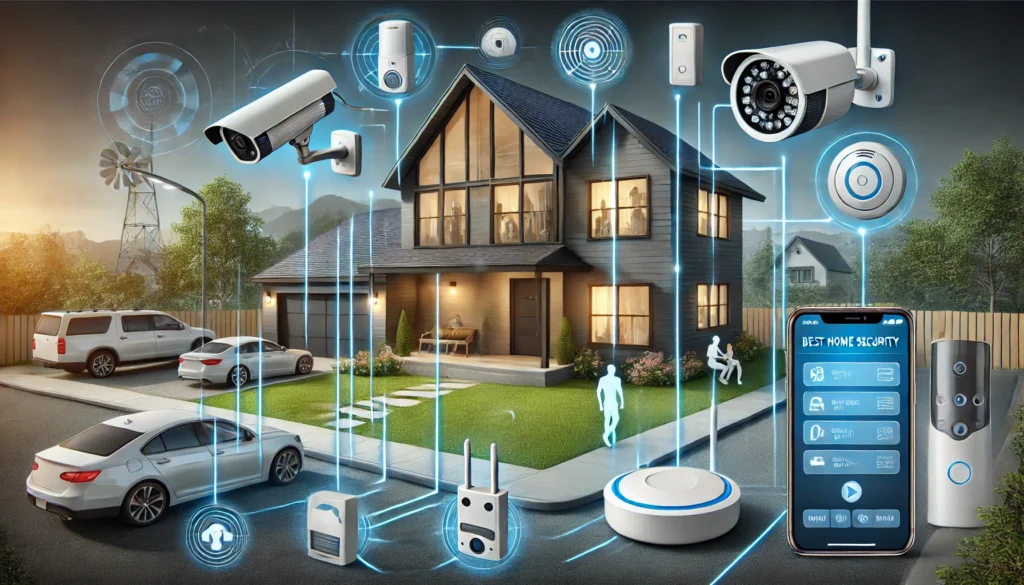
Modern home security systems are marketed as intelligent, adaptive, and connected. Cameras stream globally while alarm panels communicate through Wi-Fi, LTE backup, and cloud infrastructure simultaneously. Smart locks, garage systems, and automation routines increase convenience, but they also create layered communication dependencies most homeowners never consider.
A modern home is no longer just a physical structure protected by locks and sensors. It is a communications environment operating across fiber, coaxial cable, wireless protocols, cloud authentication systems, and mobile carrier networks. Residential security increasingly depends on infrastructure extending beyond the property itself.

Traditional alarm systems operated through comparatively simple architectures. Many relied on dedicated copper telephone lines that dialed monitoring centers directly when triggered. If the phone line failed or a wire was damaged, homeowners usually understood immediately that the reporting mechanism protecting the home was no longer functioning properly.
Modern connected alarm systems operate very differently. A motion sensor triggering inside the home may rely on buried fiber or coax infrastructure, an exterior modem or optical network terminal, cloud authentication servers, mobile carrier routing, and smartphone applications before notifications ever reach the homeowner.
The alarm system is no longer a single device mounted inside the house. It is an interconnected communications chain dependent on stable transport pathways, external infrastructure, cloud synchronization, and wireless reliability. Cameras, smart locks, garage systems, and automation routines frequently share the same communications environment and bandwidth simultaneously.
That distinction matters because modern systems are intentionally designed to tolerate instability. Cameras reconnect automatically after outages, mesh networks reroute traffic between nodes, and alarm panels enter fallback states during internet disruptions. Delayed notifications, buffering, and intermittent connectivity have become normalized behavior within connected residential environments.

This normalization creates a different category of vulnerability than traditional alarm failures. In older systems, malfunction was loud and visible. In modern ecosystems, degradation is often partial and quiet. Communication reliability may weaken without fully disabling the system, reducing visibility while maintaining the appearance of operational functionality.
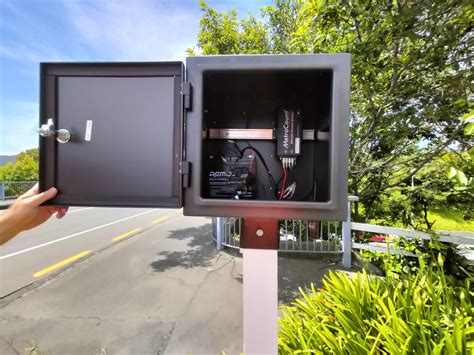
The buried telecom infrastructure supporting modern security systems is rarely included in residential threat modeling discussions. Yet underground fiber lines, coaxial pathways, copper telephone infrastructure, telecom vaults, utility easements, and exterior demarcation points often form the transport layer carrying alarm signals between homes and monitoring providers.

Homeowners often view security as something mounted directly onto walls, windows, and doors. In reality, many connected systems depend on communications infrastructure physically extending beyond the property itself. The operational backbone supporting smart-home security may ultimately exist beneath streets, sidewalks, easements, and neighborhood utility corridors.
If instability occurs anywhere along that communications chain, the failure may not resemble a traditional alarm outage. Homeowners may instead experience delayed notifications, intermittent camera buffering, failed cloud synchronization, offline indicators, or increased reliance on LTE fallback systems while the alarm still appears fully armed and operational.
Wireless complexity further complicates modern residential security environments. Homes now operate within dense radio-frequency ecosystems saturated with Wi-Fi, Bluetooth, Zigbee, Z-Wave, IoT devices, smart appliances, gaming systems, televisions, voice assistants, and mobile devices communicating simultaneously across overlapping wireless environments every day.
Because modern alarm ecosystems prioritize usability and false-alarm reduction, many communication disruptions are treated as recoverable technical events rather than emergencies. Systems automatically attempt re-connection, buffering, synchronization, and fallback routing without homeowner intervention. From a security perspective, this creates ambiguity between ordinary instability and meaningful communication degradation.

A homeowner waking up to discover cameras offline for twenty minutes may blame the ISP. Delayed push notifications may be attributed to poor cellular coverage. A mesh node reboot occurring overnight may never be noticed at all. Within many connected ecosystems, normal instability and meaningful disruption can appear operationally similar.
This represents a significant evolution in residential threat modeling. Security can no longer be evaluated solely through physical barriers such as locks, motion sensors, and cameras. The reliability of the communications infrastructure supporting those devices has become equally important to understanding how modern alarm ecosystems function during degraded conditions.
The weakest point in a modern alarm ecosystem may not be the keypad, siren, or front door sensor. It may be the invisible transport layer carrying signals beneath neighborhoods through buried infrastructure homeowners never monitor directly. Connected homes increasingly depend on communications pathways most residents neither see nor fully understand.
The future of residential security is not simply about adding more connected devices or cloud-enabled features. It is about understanding the dependencies those technologies introduce. In connected environments, security is no longer just about preventing entry. It is about maintaining trustworthy communication between homes and monitoring systems.

Modern smart-home security increasingly behaves like a SIGINT problem packaged inside a home goods box. The risk is no longer limited to whether a system is armed, powered, or physically intact. Attackers do not necessarily need to defeat the alarm itself. They may only need to exist inside the gap between “still armed” and “still reporting.”
No connected home can be fully isolated from communications infrastructure, but homeowners can reduce risk by understanding where critical dependencies exist. Local recording for cameras can preserve footage during cloud interruptions. Battery backup systems for routers, ONTs, and alarm panels help maintain reporting continuity during outages. Wired sensors and hardwired Ethernet connections are generally more stable than fully wireless deployments in congested environments.
Visibility also matters. Many homeowners monitor whether a system is armed but never monitor whether critical devices recently disconnected, failed over to LTE, or stopped synchronizing with cloud services. Reviewing outage logs, connectivity history, and repeated offline events can provide better insight into how a system behaves during degraded conditions.
Most importantly, connected security systems should be evaluated as communications ecosystems rather than standalone alarm products. The reliability of the transport layer — including fiber, coaxial, wireless, and cloud infrastructure — is now directly tied to the reliability of the security system itself.
Discover more from Solide Info | The Engineer’s Authority on Cyber Defense
Subscribe to get the latest posts sent to your email.