Analyzing security breaches requires a structured methodology, making the cyber kill chain an essential operational model for modern intrusion detection and defensive response. Modern enterprise networks face persistent, multi-stage cyber attacks that bypass perimeter-only defenses.
By deconstructing adversary movements into distinct tactical stages, security teams transform reactive monitoring into proactive threat hunting. Aligning intrusion analysis with structured frameworks enables rapid containment, reduces dwell time, and improves organizational resilience.
- Early-Stage Interruption: Neutralizing threats during initial reconnaissance or weaponization prevents lateral movement and costly operational downtime.
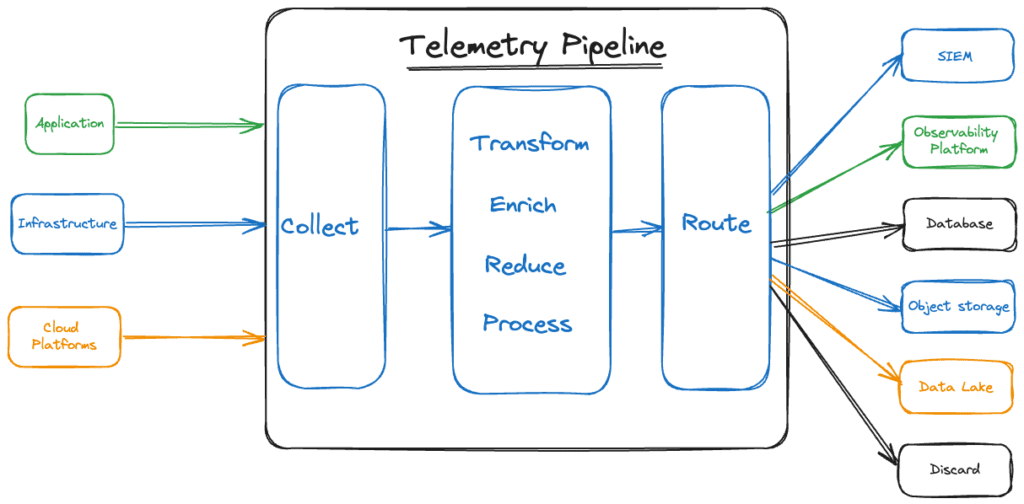
- Unified Telemetry: Correlating network logs, endpoint events, and cloud telemetry across each layer exposes hidden malicious activities.
- Framework Convergence: Combining traditional linear kill chain models with dynamic matrix frameworks optimizes detection coverage across complex environments.
- Automated Containment: Integrating automated orchestration playbooks accelerates response times, shutting down adversary communication channels instantaneously.
Deconstructing the Cyber Kill Chain in Modern Enterprise Defense
Understanding adversary methodologies requires analyzing how multi-stage intrusions develop across enterprise environments. Threat actors rarely compromise systems in a single step; instead, they execute calculated operational phases.
Deconstructing these phases gives defenders multiple opportunities to detect, disrupt, and neutralize malicious activities before critical assets are compromised.

The Seven Phases of the Classic Intrusion Model
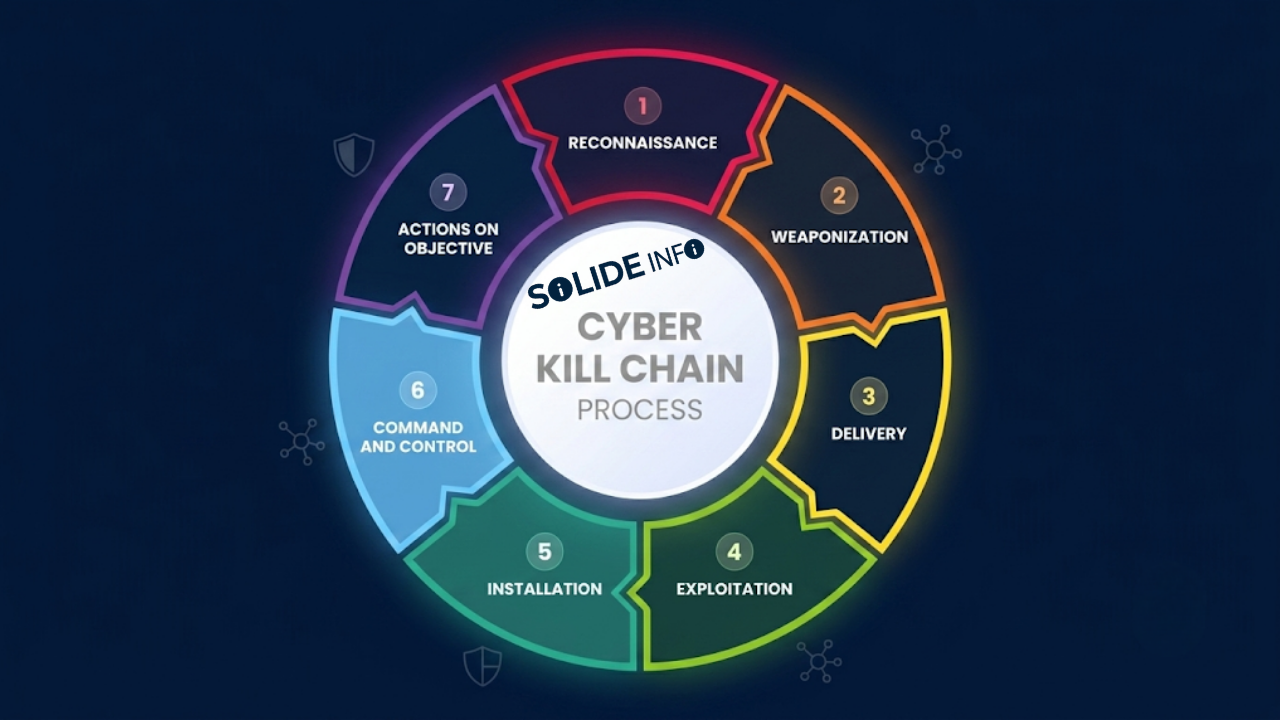
The classic intrusion lifecycle outlines the sequential steps an external attacker must complete to achieve their objective inside a targeted network.
Reconnaissance involves harvesting intelligence, identifying vulnerable public IP addresses, scanning exposed web services, and gathering target employee details.
Weaponization pairs an exploit payload with a tailored delivery mechanism, creating weaponized office documents, malicious scripts, or customized executable files.
Delivery transmits the weaponized bundle to the target via spear-phishing emails, compromised software supply chains, or vulnerable external web applications.
Exploitation triggers the malicious payload, leveraging software vulnerabilities or operating system misconfigurations to execute unauthorized code on the victim’s host.
Installation establishes persistent access on the compromised system, writing registry keys, deploying scheduled tasks, or dropping secondary backdoor utilities.
Command and Control (C2) opens a covert communication channel back to external adversary infrastructure, allowing remote command execution and data exfiltration.
Actions on Objectives represents the final phase where adversaries execute their ultimate mission, including data theft, ransomware deployment, or system destruction.
Tactical Evolution Beyond Linear Models
While the traditional kill chain model provides an excellent foundation, modern advanced persistent threats (APTs) operate with greater agility and non-linear movement.
Defenders must account for living-off-the-land techniques, credential harvesting, and cloud-native pivot vectors that bypass traditional linear progression.
Modern adversaries frequently loop between lateral movement, internal privilege escalation, and localized discovery before attempting final data exfiltration.
Integrating adversary behavior analytics into endpoint detection and response (EDR) platforms allows security analyst teams to track these complex loops effectively.
Mapping Cyber Chain Kill Mechanics to MITRE ATT&CK
To gain granular operational visibility, enterprise security teams map traditional cyber chain kill phases directly to the mitre attack framework.
While the intrusion model defines high-level structural phases, the secondary taxonomy provides granular descriptions of specific tactics, techniques, and procedures (TTPs).
This tactical alignment allows security operations center (SOC) analysts to translate abstract threat intelligence into actionable detection rules and threat hunting queries.
For example, mapping C2 activities to specific matrix techniques (such as encrypted channel communications over non-standard ports) enables precise detection engineering.
| Phase | Tactical Focus | Primary Objective | Key Security Control |
| Reconnaissance | External Surface | Intelligence Gathering | Attack Surface Management & Threat Intel |
| Weaponization | Payload Preparation | Exploit Packaging | Threat Intelligence Sharing & Sandbox Analysis |
| Delivery | Transport Vector | Ingress Transmission | Email Gateway Filters & Web Firewalls |
| Exploitation | System Execution | Flaw Triggering | Endpoint Protection & Patch Management |
| Installation | System Persistence | Foothold Maintenance | EDR & File Integrity Monitoring (FIM) |
| Command & Control | Communication | Remote Command | Next-Gen Firewalls & DNS Sinkholing |
| Actions on Objectives | Mission Execution | Exfiltration / Destruction | Data Loss Prevention (DLP) & Microsegmentation |
Architectural Integration Across Hybrid Infrastructure
Applying defensive controls across multi-stage intrusions requires deep integration into hybrid enterprise architectures, cloud platforms, and enterprise network perimeters.
Deploying layered security controls ensures that if an attacker slips past initial perimeter filters, subsequent internal monitoring nodes trigger defensive alerts.

Perimeter Security and Early Stage Interruption
Blocking attacks during early delivery or exploitation phases yields the highest return on investment for enterprise operational security.
Deploying email security gateways with deep attachment sandboxing disrupts weaponized payloads before they ever reach an end-user inbox.
Web application firewalls (WAF) inspect incoming HTTP requests, blocking known exploit signatures targeting exposed public web applications and APIs.
Additionally, leveraging domain name system (DNS) filtering prevents hosts from resolving known malicious malicious infrastructure domains during initial malware phone-home actions.
Internal Monitoring, Telemetry, and Detection Engineering
Once an attacker achieves initial execution on an endpoint, internal log aggregation and correlation become vital for rapid detection.
Security platforms collect event logs from operating systems, endpoint sensors, hypervisors, and core networking gear into central repositories.
Correlating process creation events with network connection logs exposes unauthorized process execution attempting outbound external network connections.
Bash
# Querying Windows Event Logs for suspicious process creation (Event ID 4688)
Get-WinEvent -FilterHashtable @{LogName='Security'; Id=4688} |
Where-Object {$_.Message -match "cmd.exe" -or $_.Message -match "powershell.exe"} |
Select-Object TimeCreated, Id, Message | Select-Object -First 5
Plaintext
TimeCreated           Id Message
-----------           -- -------
2026-08-01 14:22:10 4688 A new process has been created. New Process Name: C:\Windows\System32\WindowsPowerShell\v1.0\powershell.exe Process Command Line: powershell.exe -ExecutionPolicy Bypass -NoProfile -EncodedCommand Q2hhaW4gS2lsbCBUZXN0
2026-08-01 14:18:05 4688 A new process has been created. New Process Name: C:\Windows\System32\cmd.exe Process Command Line: cmd.exe /c start /min malicious_installer.exe
Analyzing command-line arguments using central security controls exposes stealthy operational tactics, such as obfuscated PowerShell commands designed to evade signature detection.
Cloud Native Detection Vectors
Extending defensive capabilities into public cloud infrastructure requires monitoring control plane APIs and cloud identity providers.
Adversaries targeting cloud environments often skip traditional network exploitation, leveraging compromised API keys or session tokens to achieve persistence.
Detecting anomalous service principal activity or unexpected role assignments prevents actors from escalating privileges across cloud environments.
Configuring real-time alerts for access pattern anomalies ensures security analysts detect lateral movement across hybrid-cloud boundaries immediately.
Operational Threat Hunting and Tactical Incident Response
Executing effective incident response protocols requires pre-configured playbooks aligned with specific adversary intrusion techniques and operational behavior.
When security analyst teams detect anomalous activity, structured response procedures prevent localized security incidents from cascading into enterprise-wide outages.

Proactive Threat Hunting Strategies
Proactive threat hunting assumes that intelligent adversaries have already bypassed perimeter defenses and established internal host access.
Hunters utilize hypothesis-driven testing to interrogate internal telemetry, searching for subtle anomalies that automated alerts may have missed.
Scanning network segments for unusual internal administrative connections (such as SSH or RDP between user workstations) reveals lateral movement indicators.
Python
import os
import sys

def audit_network_connections(threshold_bytes=10000000):
    """
    Simulates checking active network sockets for unusually high data transmission,
    which may indicate staging or active data exfiltration.
    """
    print("[*] Initiating Network Telemetry Audit...")
    # Simulated inspection logic for active operational telemetry
    active_sockets = [
        {"pid": 4120, "process": "svchost.exe", "dest": "10.0.4.15", "bytes_sent": 5200},
        {"pid": 8832, "process": "rundll32.exe", "dest": "198.51.100.44", "bytes_sent": 45000000}
    ]

    for conn in active_sockets:
        if conn["bytes_sent"] > threshold_bytes:
            print(f"[ALERT] Anomalous transfer detected: PID {conn['pid']} ({conn['process']}) -> {conn['dest']} | Sent: {conn['bytes_sent']} bytes")

if __name__ == "__main__":
    audit_network_connections()
Plaintext
[*] Initiating Network Telemetry Audit...
[ALERT] Anomalous transfer detected: PID 8832 (rundll32.exe) -> 198.51.100.44 | Sent: 45000000 bytes
Running analytical scripts continuously against endpoint event streams provides early warning indicators of unauthorized data staging and outbound transfer.
Automated Containment Playbooks
Minimizing adversary dwell time requires transforming detection alerts into automated response actions through Security Orchestration, Automation, and Response (SOAR) workflows.
When high-confidence alerts identify command-and-control communications, containment playbooks isolate affected endpoints from internal networks instantly.
Bash
#!/bin/bash
# Enterprise Automated Containment Script
# Purpose: Isolate compromised host and revoke active identity sessions upon C2 alert trigger.

TARGET_HOST_IP=$1
TARGET_USER=$2

if [ -z "$TARGET_HOST_IP" ]; then
    echo "[-] Error: Target IP parameter missing."
    exit 1
fi

echo "[*] Executing Automated Host Isolation for IP: ${TARGET_HOST_IP}"

# Network Level Isolation via Firewall API
curl -s -X POST "https://firewall.internal.net/api/v1/isolate" \
     -H "Content-Type: application/json" \
     -d "{\"ip\": \"${TARGET_HOST_IP}\", \"action\": \"quarantine\"}"

echo "[+] Network quarantine policy applied successfully."

# Revoke Active Directory / Cloud Identity Tokens
if [ -n "$TARGET_USER" ]; then
    echo "[*] Revoking active identity sessions for user: ${TARGET_USER}"
    # Simulated API call to identity broker
    echo "[+] Identity session tokens revoked for: ${TARGET_USER}"
fi

exit 0
Plaintext
[*] Executing Automated Host Isolation for IP: 192.168.10.45
[+] Network quarantine policy applied successfully.
[*] Revoking active identity sessions for user: localized_analyst
[+] Identity session tokens revoked for: localized_analyst
Automating initial containment steps contains malicious activity within seconds, preventing privilege escalation while analysts conduct forensic investigation.
Post-Incident Forensic Reconstruction
Following containment, forensic specialists reconstruct adversary timelines by analyzing system memory, disk artifacts, and network capture files.
Determining the exact entry vector prevents adversaries from reusing identical vulnerability paths to re-enter enterprise infrastructure.
Remediation teams patch exposed software flaws, reset compromised identity credentials, and update central firewall rule bases accordingly.
Documenting lessons learned ensures enterprise defense strategy evolves dynamically alongside emerging adversary tactics and technical capabilities.
Enterprise Tooling and Defensive Technologies
Selecting appropriate defensive tools requires evaluating open-source software against commercial enterprise security suites.
Modern organizations build resilient security architectures by combining flexible open-source logging tools with specialized enterprise platforms.
| Technology Category | Open-Source Solutions | Commercial Enterprise Suites | Key Operational Advantage |
| SIEM & Analytics | Wazuh, Elastic Stack (ELK) | Splunk Enterprise Security, Microsoft Sentinel | Real-time event correlation & security monitoring |
| Endpoint Security | OpenEDR, OSQuery | CrowdStrike Falcon, Microsoft Defender for Endpoint | Behavioral execution monitoring & process control |
| Network Visibility | Suricata, Zeek | Palo Alto Networks, Cisco Secure Firewall | Deep packet inspection & network anomaly detection |
| Automation / SOAR | Shuffle, Cortex | Palo Alto Cortex XSOAR, Swimlane | Automated playbook execution & rapid isolation |
Enterprise IT environments require continuous evaluation of security platform integrations to eliminate coverage gaps across complex hybrid networks.
Frequently Asked Questions
How does analyzing intrusion phases improve strategic enterprise IT planning?
Deconstructing attack lifecycles helps security leaders allocate security investments effectively based on real-world risk. Identifying weak points in early delivery or internal monitoring allows CISOs to prioritize budget spend where it stops threats most effectively.
What is the primary difference between linear kill chains and the MITRE ATT&CK framework?
The traditional model offers a high-level sequential phase progression ideal for executive reporting and structural planning. The secondary matrix provides a granular, non-linear index of specific attacker tactics and techniques suitable for SOC analysts and detection engineers.
Can automated security tools disrupt advanced multi-stage attacks without human intervention?
Automated tools stop high-confidence malicious actions instantly, such as blocking payload downloads or isolating hosts exhibiting known ransomware behavior. However, complex human-driven APT intrusions still require expert threat analysts to investigate novel evasion tactics.
How do modern encrypted protocols impact network-level intrusion detection?
Encrypted traffic limits traditional payload inspection at the network layer. Modern security architectures compensate by analyzing TLS handshake metadata, monitoring flow characteristics, and deploying endpoint-based sensors to inspect decrypted process behavior directly.
What initial steps should an organization take to deploy phased threat detection?
Organizations should start by establishing central logging across endpoints, domain controllers, and perimeter firewalls. Once basic telemetry visibility is established, security teams can implement correlation rules that map directly to common initial delivery and execution techniques.
Integrating defensive controls across every layer of the cyber kill chain ensures that security teams neutralize attacks long before adversaries achieve their final objectives.
Discover more from Solide Info | The Engineer’s Authority on Cyber Defense
Subscribe to get the latest posts sent to your email.