Most people think of a laptop as a single endpoint: one machine, one user session, one visible network connection. But when artifacts such as vEthernet adapters and virtual switch records appear, everything changes.
When virtual hard drive traces begin appearing alongside synchronized bursts of system activity, the threat model shifts. We move from endpoint analysis to infrastructure analysis. The machine becomes a potential node within a larger stack.
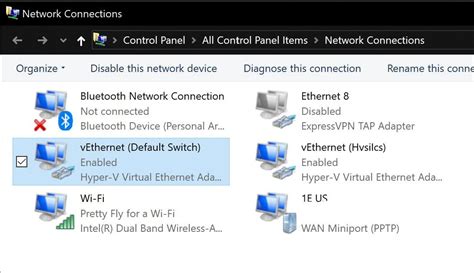
The presence of vEthernet is central to this model. Virtual Ethernet adapters indicate that traffic may be traversing a host-managed network layer. This layer remains separate from the physical Wi-Fi or Ethernet interface.
In enterprise environments, these interfaces are often associated with virtualization platforms and containerized networking. From a threat-model perspective, this creates an alternate transport lane capable of isolating traffic from the visible desktop session.
Hidden Lanes: vEthernet and Isolated Transport
Data movement through this layer does not resemble ordinary browser usage. When paired with virtual hard drive artifacts, the architecture becomes more significant. Mounted virtual disks and transient volume traces suggest isolated workspaces.
In these spaces, data can be staged, processed, and transferred outside the normal user file structure. Rather than operating within obvious folders, collection and relay activity may occur inside detached logical volumes.
This leaves behind only fragmented evidence across system services, event logs, and storage mount records. Viewed alongside Hyper-V and HNS traces, the broader architecture resembles a “burst-based” collection model.
In this scenario, the laptop temporarily activates a virtual switch path. It accesses a staged storage layer, performs synchronized service activity, and moves data through a transport layer before returning to a normal state.
Forensic Correlation: Reconstructing the Operational Stack
This type of architecture is especially difficult to reconstruct because the visible environment reflects only one layer. The periods of extreme process churn observed during key timestamps are consistent with this hidden model.
Virtual network initialization, service orchestration, COM activation, and transport-layer tunneling all generate rapid bursts of activity. When these events align with specific times, the endpoint resembles a temporary relay node.
The broader cybersecurity implication is clear: once virtualization artifacts and staged storage layers converge, the endpoint should be threat-modeled as host infrastructure. It is no longer just a workstation for a user.
The system effectively operates as a host, virtual switch, storage container, and transfer lane. This enables collection and packaging across layered paths that are not immediately visible to standard user workflows.

The Architecture of Stealth: Covert Staging and Transfer
The answer to this threat lies in correlation, not isolated artifacts. A single vEthernet adapter or a mounted virtual volume may have benign explanations. What changes the analysis is repeated convergence.
When virtual switch events, storage attachment traces, and process churn all align to specific timestamps, the endpoint reveals orchestrated infrastructure use. This is where timeline reconstruction becomes a critical tool for investigators.
Investigators should work backward from high-activity windows. Examine the thirty to sixty seconds surrounding each cluster. Network initialization, route changes, and storage mount events often occur in extremely tight succession.
The architecture is rarely visible in a single log entry; it emerges through sequence. A virtual switch created seconds before a volume appears tells a far more meaningful story than any one event alone.
Implications for Modern Intrusion Events
In practical terms, a Virtual Switch Architecture changes how an endpoint participates in an environment. Instead of a single-user workstation, the host can support segmented traffic paths and isolated service communications.
This matters because it expands the possible roles of the device during an intrusion. Data does not need to move directly from a visible application. It can be collected locally and staged within a storage layer.
It then passes through the internal switching framework and transmits through a separate transport channel. This layered movement reduces visibility at the user level and makes reconstruction dependent on system-level sequencing.
In a nefarious setup, this allows a compromised endpoint to function as a covert staging point. The system can quietly collect files, audio, or application artifacts while blending into legitimate system behavior.
Discover more from Solide Info | The Engineer’s Authority on Cyber Defense
Subscribe to get the latest posts sent to your email.