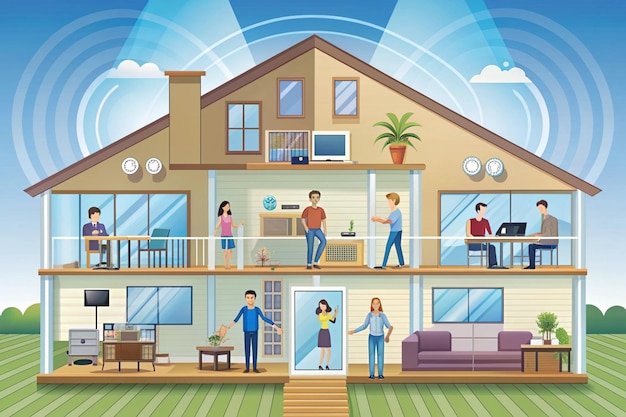
Modern buildings have evolved far beyond simple structures designed only to provide shelter. Today’s homes are complex ecosystems filled with electrical, mechanical, and digital systems operating continuously around us.
Many of these systems improve convenience, efficiency, and comfort. However, they also create an environmental landscape that extends beyond what we can see, introducing subtle sounds, vibrations, and sensory inputs into our daily lives.

The hidden soundscape of a modern building is made up of countless contributors. Electronics, appliances, HVAC systems, plumbing infrastructure, neighboring units, and mechanical equipment each add their own acoustic signature.
Some sounds are obvious, such as a furnace starting or an appliance running. Others are far more subtle, appearing as faint hums, periodic clicks, low vibrations, or high-frequency tones.
Modern electronics have become one of the newest contributors to this changing acoustic environment. Chargers, LED lighting, televisions, computers, networking equipment, and smart devices operate around the clock.
Many of these devices contain switching power supplies, transformers, inductors, and other components capable of producing audible electrical sounds. This phenomenon, commonly called coil whine, is often overlooked in discussions of indoor comfort.
As homes become increasingly connected, the number of electronic devices operating within a single space continues to rise. Individually they may seem insignificant, but collectively they contribute to the overall sensory environment.
HVAC systems introduce another significant layer to the hidden soundscape. Air handlers, heat pumps, compressors, blower motors, dampers, and electronic controls produce changing sounds during normal operation.

Modern high-efficiency HVAC systems often use variable-speed motors and electronic controls designed to adjust output based on environmental demands. These changing operating conditions can create shifting acoustic patterns throughout the day.
Mechanical sounds are not always confined to the equipment producing them. Vibrations can travel through ductwork, walls, floors, ceilings, and structural framing before becoming audible in entirely different locations.
This challenge becomes increasingly important in apartments, condominiums, and townhouses, where multiple independent systems operate in close physical proximity to one another.
A person may hear a vibration or high-pitched tone inside their bedroom and naturally assume the source is nearby. In reality, the origin may be another room, another system, or another unit.

The relationship between buildings and human health extends beyond simple comfort. The human central nervous system continuously receives and processes information from the surrounding environment.
The brain is constantly performing a process of sensory evaluation, identifying patterns, filtering familiar information, and recognizing changes that may require additional attention or awareness.
Many routine environmental sounds gradually fade into the background through a process known as habituation. This allows people to function without consciously processing every sensation surrounding them.
However, unpredictable, intermittent, unusual, or difficult-to-locate sounds may continue capturing attention because the brain repeatedly evaluates them as unresolved sensory information.

This heightened state of awareness may become mentally exhausting for some individuals, particularly when unwanted environmental disturbances interfere with relaxation, concentration, or restorative sleep.
Sleep is one of the body’s most important periods of recovery and regulation. Persistent environmental disturbances that repeatedly interrupt sleep may influence mood, stress, attention, and overall well-being.
The effects of environmental sound are not identical for every person. Individual differences in hearing, sensory sensitivity, health conditions, stress levels, and personal perception all influence the experience.
The hidden soundscape of modern buildings also extends to the animals sharing these environments. Dogs and cats often perceive frequencies and subtle sounds that humans may never consciously recognize.
For animals, environmental control is limited because they depend entirely on the spaces humans create for them. A persistent source of distress may be difficult for an animal to understand or avoid.
Research suggests that environmental noise impacts in animals are most strongly associated with stress responses, behavioral changes, and physiological adaptations rather than direct links to diseases such as cancer.

When animals experience prolonged or unpredictable environmental stress, their bodies may activate biological stress pathways involving hormones such as cortisol and other regulatory systems.
Over time, chronic stress may contribute to changes in appetite, digestive function, sleep patterns, immune responses, heart rate, and other aspects of physiological regulation. This can look like full body shaking and chronic diarrhea.
The environment surrounding an animal’s resting area deserves careful consideration. Metal crates, enclosed spaces, or areas near persistent sources of noise and vibration may alter an animal’s comfort experience.
The growing complexity of modern buildings creates a responsibility beyond energy savings and technological advancement. The environments we create should support the biological needs of the living beings inside them.

Architects, builders, engineers, manufacturers, and homeowners all play a role in creating healthier spaces. Acoustic design deserves consideration alongside efficiency, automation, and modern convenience.
Thoughtful HVAC installation, vibration isolation, equipment placement, quality construction materials, proper maintenance, and sound-dampening strategies can reduce unnecessary environmental burdens. Something as simple as insulation can help mitigate environmental noise.
A truly advanced building should not only be intelligent and efficient—it should also be responsive to the sensory experience of its occupants, both human and animal. This is a level of basic responsibility.
The goal is not to fear technology or return to a less connected world. It is to recognize that the systems surrounding us become part of our environment and our lived experience. Insulating walls in an absolutely BASIC way to mitigate noise pollution within a home. Don’t assume the property you are renting has insulation. I rented a home in the wealthiest part of Oklahoma (Nichols Hills) and the home had absolutely zero insulation with the exception of outdated insulation in the floor of the attic
Discover more from Solide Info | The Engineer’s Authority on Cyber Defense
Subscribe to get the latest posts sent to your email.